



“I’ve diagnosed you with a severe case of post traumatic stress disorder,” Dr. K told me when, after two years of psychotherapy, I asked for her clinical assessment.
I was taken aback. I knew I suffered from anxiety, but PTSD seemed a little extreme. After all, I’d stopped having daily panic attacks years earlier by simply making a few lifestyle changes: I rarely socialized, I never answered the phone, and I did my best to limit even casual interactions with other people.
But despite my meticulously structured life, I felt more isolated and misunderstood with each passing year. My “contempt for mankind,” as I called it, seemed to be getting worse. I was often rude and impatient with strangers, coworkers and even friends, whom I now mostly avoided.
During our first session Dr. K. had asked for my family history. Irritated by the question, I recited my childhood traumas as if they were no more significant than items on a grocery list:
 “My father is a paranoid schizophrenic who would destroy everything in the house during his rages. He never hit my mother or me, but he would humiliate and threaten us and sometimes beat my brother until he was unconscious.
“My mother was raised by nuns in an orphanage in Ireland. She can be very violent and abusive, especially when she’s drunk. She threatens to commit suicide a lot.
“My brother was a professional bodybuilder, but he got addicted to steroids and street drugs and developed some kind of psychosis. He’s in a psychiatric prison for the rest of his life.
“In other words,” I said casually, “my whole family is flamboyantly insane.”
“It’s interesting,” Dr. K said. “Most people with your background have been hospitalized more than once and need medication to cope with daily life. But you’ve become a successful business woman and have avoided repeating these behaviors.”
“I know it sounds bad, but all that stuff happened a long time ago,” I told her. “It has no bearing on my life now.”
“Fair enough,” she said, “then let’s talk about why you’re here.”
The reason I sought therapy, I explained, was because of my inability to meaningfully connect with others. A former boyfriend had described me as “impervious to everything,” and friends often accused me of being cold and aloof. While my emotional range – or lack thereof – didn’t cause me distress, the people around me could find it intolerable.
Dr. K suggested we begin therapy designed to treat PTSD, which she felt was the underlying cause of my attenuated emotions. I resisted.
“I think you focus too much on my childhood,” I told her. “People who obsess about the past always get stuck there. I never think about it and I want to keep it that way.”
__________
To say Sam wasn’t my type would be an understatement: hirsute and muscular, with a deep, gruff voice and a tendency to talk about protein supplements and smoking weed. My father and brother had been bodybuilders, and as a teenager I’d been repulsed by their crude sense of vanity and the suppurating, often-bleeding pustules that covered their shoulders and backs (a common side effect of steroid abuse.) I preferred intellectually driven men with elegant bodies who rarely lifted anything heavier than a book.
But despite my aversion to his “type,” I was irrepressibly drawn to Sam. He was a study in contrasts: intimidating one minute and endearingly shy and self-conscious the next. Beneath his hulking exterior I sensed the vestigial traces of a fellow nerd. I wasn’t surprised to learn he was from Pennsylvania and was only in Los Angeles for a modeling assignment.
“I always get along best with east coast guys,” I told him.
The chemistry between us was instant - and intense. We talked about everything from math to philosophy to his ongoing “baby-mama problems.” Because I was older than he was, he enjoyed letting me lead the way in our intellectual discussions. He listened attentively, excited to be learning new things.
“You’re such a beautiful woman,” he told me. “I haven’t even left yet, and I miss you already.”
After he flew back to Pennsylvania we communicated daily by text. He was returning to LA the following week for another modeling gig, and we counted the days until we could see each other again.
But a few days before his return, he mentioned that he had to move out of his apartment, so he might take a little longer than usual to answer texts that day.
“Where are you moving?” I asked, surprised that he hadn’t mentioned it in any of our previous conversations.
He didn’t know, he said. Probably to a hotel while he “figured things out.” I wondered why he hadn’t lined up a new place to live before leaving his old one, but he didn’t offer an explanation. Not sure what to say, I told him he was welcome to stay in my guest room while he was in LA for his modeling gig.
“After your shoot, you’ll have money to get a new place,” I told him. “Don’t worry, you’ll be fine.”
Despite my outward optimism, the emerging instability of his life gave me pause. Maybe I’d happened to catch him at a time of transition, I reasoned. After all, he was a model, not an accountant. He’d often described himself as “a gypsy.”
“Stop looking for red flags,” I told myself. “Don’t be so quick to judge people.”
Upon Sam’s return to California, we became lovers. I’d fixed up the guest room for him, but he had no interest in using it. He preferred to sleep with me, and to spend every waking moment with me, too. He didn’t want to go back to Pennsylvania, he told me. He wanted to stay in Los Angeles so we could be together.
He also wanted to quit nude modeling, he said, because it was “fucking with him psychologically.” He’d done it out of financial necessity when he was single, but now that we were together he didn’t want to share his body with anyone but me. He decided to cancel the lucrative modeling assignment for which he’d flown to LA.
I tried to hide my apprehension - this was all happening so fast - and instead I assured him that he’d have my support. Obviously, he shouldn’t keep modeling if it was harming him emotionally.
“Somehow,” I told him with a certainty I didn’t quite feel, we’d “work everything out.”
In the weeks that followed, we seemed to be doing just that. Sam was noticeably relieved that he no longer “had” to model, and he appeared to be thriving in his new, nurturing environment. We became inseparable, clinging to each other with what was, for me, an uncommon intensity. He cooked me breakfast every day and held me in his arms all night, caressing my hair and whispering in my ear how much he loved me. I was surprised to find I didn’t feel smothered as I normally would under far less intimate circumstances. There was something about Sam that cut through all of my usual defenses.
He also began confiding in me about his troubled history. His background was similar to my brother’s, and I felt instantly protective of him. We were shocked at the parallels in our childhoods and the often-identical ways we’d reacted to the chaos around us. I’d never felt so accepted, so understood, and so genuinely loved.
But punctuating our honeymoon phase were glimpses of Sam’s inner turmoil and the demons he admitted to struggling with. His mood would suddenly turn dark and he’d stop talking to me, or he’d storm out of the house with no explanation, and text me from outside that he was angry that I was working on the computer and “ignoring” him. I also noticed that he used terms like “skanky whore” and “dumb cunt” when referring to his former girlfriends - including the mother of his child.
“I hear you on the phone with your ex-wife and it doesn’t even sound like you,” I told him. “You say such terrible things to her.”
“Because she’s a shitty person,” he explained. “I treat people the way they deserve to be treated.”
“I hope I never deserve to be treated like that,” I said.
“I would never talk to you that way,” he assured me. “You’re a quality woman. I never felt for her what I feel for you.”
__________
It was barely two months after he moved in that I called the police on Sam for the first time. Lurking beneath his daily proclamations of love, Sam had been harboring suspicions that I was cheating on him. He’d been going through my cell phone and email without my knowledge, searching for evidence of my betrayal. Considering I rarely left his sight, I found it almost funny. I didn’t like him invading my privacy, but I also knew I wasn’t guilty of anything. Once he saw how ridiculous the whole thing was, surely he would let it go.
But no matter what I did (or didn’t do) Sam’s distrust for me continued to grow. Worn down by his insecurity and accusations, I suggested that maybe we’d moved too fast and should “take a step back.” If he felt he couldn’t trust me, I said, maybe living together wasn’t such a good idea.
He became enraged. He started shaking, yelling and calling me names. Whore. Bitch. Liar. I ran into my room and closed the door, but he pushed it open and continued yelling at me, demanding to know who I was planning to leave him for.
“Who is he?” he demanded. “Who is it you want to fuck?”
Suddenly, I remembered being a child and watching my father stand in the doorway while I clung to my mother’s leg.
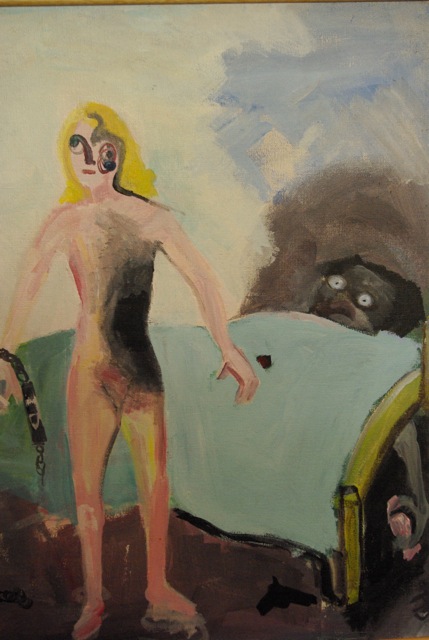
Tell me who you’re fucking, my father had said, turning the pages of my mother’s address book and calmly ripping them out to examine them. Not that anyone would want you anyway – your legs are like tree stumps. Oh, what’s this? He ripped out another page and held it up so she could see it. ‘Joe’? Who the fuck is Joe?
The guy who helped us move the furniture, my mother said.
Don’t lie to me! He’d yelled, throwing the book at her.
“Please,” I begged Sam. “Please, just leave me alone.”
“Write me a check and I’ll get out of here,” he told me. “You’ll never have to see me again.”
“Write you a check for what?” I said, outraged. I had been paying all of his living expenses since the day he moved in.
“Give me three grand and I’ll get out.”
“This is my house and you’ve never paid rent here,” I reminded him. “I’ll call the police if I have to.”
He laughed.
“Go ahead and call them, you dumb cunt. I get mail here, I’ve established residency. Give me a check or I’m not leaving.”
I ran out of the house in a panic, and called the police from my front yard.
When the officers arrived, they explained that Sam was right that he’d established residency in my home (how had he known?). The only way to remove him, they said, was to file charges for domestic abuse so they could place him under arrest. Otherwise, he’d have to leave on his own.
I felt paralyzed. Only hours earlier we’d been eating dinner and laughing. How had this happened? Finally, Sam agreed to leave if I would buy him a plane ticket to Pennsylvania and give him money for a hotel. I immediately booked the flight and gave him all the cash I had in my wallet.
As Sam’s taxi drove away, the officer gave me a copy of the police report and told me to go to court the next morning to file a restraining order. “Cut off all contact with him,” they told me. “And don’t let him back in the house.”
No sooner had the officers left and Sam began texting me.
“I’m so sorry baby,” he wrote. “It’s the steroids. I knew this would happen if I didn’t get off them right away. You’re the most wonderful woman on earth and I can’t believe I did this to you.”
“I don’t understand,” I texted back. Only minutes earlier he’d been calling me a whore in front of the police.
“I’m post-cycling off steroids and my testosterone levels are all over the place,” he explained. “It’s making me crazy.”
“I don’t really know what to say right now,” I told him. “I’m kind of in shock.”
“Look, I’m going to stay in Pennsylvania for a few weeks until this shit is out of my system,” he informed me. “But when it’s over, please let me come back and prove to you that I’m not this monster. Don’t desert me, baby, please. I can’t make it without you.”
In the days that followed, I researched the side effects of anabolic steroids. The more I read, the more plausible it seemed that Sam’s paranoia and mood swings could have been caused by abusing steroids he’d referred to as “d-ball” and “tren.” If a drug he was giving up had been to blame for Sam’s rages, how could I abandon him? Besides, it wasn’t like he’d hit me – he’d just called me a few names. He had scared me, yes, but going to the mall is sometimes enough to terrify me, I reminded myself.
Maybe I’d overreacted.
Within a few weeks, I was picking Sam up at the airport and driving him back home. He was noticeably calmer and his voice had softened. He didn’t seem agitated when I left the house to run errands, nor did he accuse me of secretly meeting with other men.
“You’re so different,” I told him. “I guess it really was the steroids.”
“I told you,” he said, taking me in his arms. “But I still hate myself for scaring you like that. I’m supposed to be your protector.”
We eagerly settled back into domestic bliss, and our “crazy night” was all but forgotten. But soon it became clear that Sam’s calm, steroid-free demeanor was only temporary. The episodes of paranoia and violence slowly returned - as did his penchant for invading my privacy. When I demanded we end our relationship, Sam threatened suicide.
My friends and family were increasingly worried about me. I no longer returned texts or phone calls or saw anyone unless Sam was there, too. I abruptly stopped communicating with past boyfriends out of fear that Sam might think I was cheating on him.
I carefully monitored everything I said and did, hoping to anticipate what might trigger his insecurities or cause him to explode.
But by now I was harboring suspicions of my own. I had often noticed Sam’s stories seemed riddled with inconsistencies, particularly when it came to his past relationships with women. In every case the union had ended badly, with Sam invariably painting himself as the victim. The women in his past had all lied to him, deceived him, cheated on him, or “fucked him over” in some unforgiveable way. I decided to search his name on the Internet and discovered that in the recent past he’d been arrested for domestic abuse and for violating a restraining order.
But despite what I was learning about my “dream man,” I didn’t act on the knowledge that I was being lied to, manipulated and used. I continued to feel a deep sense of obligation to Sam that I couldn’t explain to anyone – least of all myself.
__________
“You’re a failure as a mother and as a woman,” Sam texted me, after I’d left the Pennsylvania hotel room we’d stayed in while visiting his child.
Once again he’d become suspicious that I was cheating on him and, in a rage, he’d smashed my iPad and taken my cell phone. He then began calling me a cunt, a liar and a whore, all in front of his two-year old child. Hotel security had escorted me to my rental car and then called the police to have him removed.
“You should just kill yourself, you snake,” he continued, as I drove away from the hotel. “I can get girls way hotter than you, but you’ll never find anyone like me, you dumb, used up old whore.”
He continued calling and texting me for hours, attacking my looks, my friends, my work and my family. He taunted me that he was still sleeping with his ex wife and that he was going back to her, then a moment later he demanded I forgive him or suffer the consequences. His were the ravings of a mind in chaos, some twisted alloy of fact and fantasy, but it didn’t matter anymore.
I boarded the next flight home, ready to accept that there was no way to help Sam. His disconnects from reality were impossible to predict or control, and I knew if I didn’t get away from him that something terrible was going to happen.
But once his temper had cooled and he’d assessed the damage to his own life, Sam called me and demanded we put the incident, like all the others, “behind us.”
“It was one bad day,” he said, sounding impatient. “Are you going to let one bad day ruin everything we’ve built?”
This time, he wasn’t apologizing. Our current relationship problems, he explained, were not due to his temper, but to my propensity for “working too much,” and my “negative thinking.”
“I want you to read the book ‘The Secret,’ because it talks about what you’re doing right now,” he counseled. “If you fill your head with negative thoughts, you’ll cause negative things to happen.”
“I’m sorry,” I told him. “I love you and I wanted to help you, but I can’t do this anymore. You’re too abusive.”
“You don’t know what abuse is,” he spat. “I never laid a hand on you, you fucking drama queen.”
Suddenly I realized that while my father had humiliated my mother, invaded her privacy and destroyed her personal belongings, he had never hit her. He would often brag about that, as if it were proof that his psychotic episodes were nothing more than typical marital spats. It also occurred to me that for the last six months I had minimized Sam’s abuse by telling myself: “It’s not like he hits me.”
When had I decided that anything short of a physical beating was fair game in a relationship?
After I stopped responding to Sam’s texts and phone calls, his rage began to escalate. If I was going to “ruin his life,” by breaking up with him, he warned, he’d have no choice but to ruin mine. He sent an email to my business partners, falsely informing them that I was stealing money from the company. He copied me on the email so I would know he was serious about carrying out his threats.
“You can end this anytime by taking me back,” he told me. “Otherwise, my mission will be to destroy you.”
When I refused, he began threatening to post my son’s name and other personal information about him on the Internet. I’d always fiercely guarded his privacy, but Sam was determined to show me that unless he got what he wanted, neither I, nor anyone I loved, would be safe.
“Now when your son’s friends Google him, they’ll find out his mother’s a whore,” he told me. “Sorry, but I’m posting everything right now.”
I began sobbing into the phone. Not my child, please do anything you want to me, but not him, I begged. Please, I screamed, please, please, please, until finally I could no longer speak and I was just screaming, over and over, helpless to stop this madman from destroying everything I cared about. I fell to the floor gasping for air, and I could feel my sister put a paper bag over my mouth and saying, “breathe, breathe,” but the darkness was so welcoming that all I wanted was to go further and further into it, and never come back.
__________
“So you understand now, why you were able to feel so comfortable with him right away,” Dr. K. said to me, as I sat across from her.
It had been two weeks since I’d collapsed, and Dr. K had prescribed sedatives until I felt strong enough to come in for an appointment. Meanwhile, my lawyer had prepared a complaint against Sam for a list of civil offenses, and notified him that he was being sued. I was also communicating with Los Angeles and Pennsylvania police departments to file a restraining order against him.
Apparently fearful that he might be facing real consequences for his behavior, Sam had finally gone silent and disappeared from my life.
“I felt comfortable with him because he was so familiar,” I said. “He symbolized the men in my family. My father, my brother.”
“Even your mother, with the threats of suicide,” Dr. K reminded me.
I nodded.
“Sam was the embodiment of everything I’ve been trying to run away from,” I told her, “but at the same time I wanted so badly to save him.”
“You wanted to save him so you could come to terms with your past,” she analyzed.
“Maybe it took something this extreme to make me face it.”
“Sometimes,” Dr. K said, “that’s how it works.”
Since beginning therapy for post-trauma syndrome, my anxiety levels have significantly decreased. I’ve started to feel more nuanced emotions: smaller, less frightened ones. Despite my ordeal with Sam, people no longer seem inherently sinister; more often they seem friendly and kind - even helpful. Rather than avoiding my friends, I now welcome their phone calls, and their presence in my life. I’ve stopped hiding away to protect my fragile psyche from a world filled with danger and threat. The threats may still be out there, but I’m not a helpless child anymore, and I can fight monsters if I have to.
 Click on image to ENLARGE and read more...







 Like Us
 Follow Us
 RSS
 Pinterest
 MeetUp
